Hero Wars Ads 2026: The Pull-the-Pin Phenomenon
From Misleading Marketing to Industry Innovation – The Complete Story of Hero Wars Advertising
If you have spent any time on social media or mobile gaming platforms in the past seven years, you have almost certainly seen a Hero Wars advertisement. They are everywhere. The same frantic puzzles, the same desperate heroes, the same near-death escapes. Love them or hate them, Hero Wars ads have become a defining feature of mobile game marketing.
This comprehensive guide explores everything about Hero Wars advertising: the famous “pull-the-pin” mechanic, why the ads look nothing like the actual game, the business strategy behind them, and what players and industry experts think about this controversial marketing approach.
1. The Ad You Know by Heart
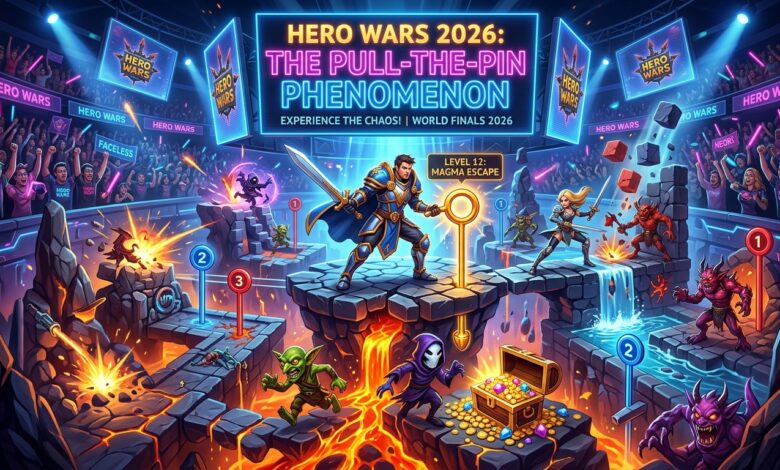
Describe a Hero Wars ad to almost anyone familiar with mobile gaming, and they can picture it instantly. The scenario typically involves a hero trapped in a dangerous situation—poison gas filling a room, spikes rising from the floor, or a horde of monsters approaching. The solution requires pulling pins or moving obstacles to guide the hero to safety. The ads present these as quick, satisfying puzzles where the correct solution leads to dramatic rescue and victory.
The production quality is notable. The ads use a specific art style, dramatic sound effects, and a clear “before and after” structure that creates satisfaction when the puzzle is solved. They are short, typically thirty seconds or less, and designed to be immediately understandable without any prior knowledge of the game.
What makes these ads particularly effective is the emotional hook. The hero appears vulnerable. The situation appears hopeless. The viewer feels compelled to intervene. Even though the ad is passive watching rather than active playing, it creates a sense of agency and problem-solving that keeps viewers engaged until the final reveal.
2. The Pull-the-Pin Mechanic: A Marketing Revolution
The puzzle mechanic featured in Hero Wars ads has a specific name: pull-the-pin. Hero Wars did not invent this mechanic, but the game unquestionably popularized it as a tool for user acquisition.
Where It Started
In 2019, Hero Wars developer Nexters made a strategic decision. Instead of advertising their actual gameplay—which is a complex hero-collection RPG with turn-based battles and resource management—they created ads featuring a simple, engaging puzzle mechanic. The results were dramatic. The company saw a significant reduction in cost per install, meaning they could acquire players much more cheaply than competitors.
The mechanic worked because it appealed to a broad audience. Casual gamers who might never download a complex RPG could understand the pull-the-pin puzzle instantly. The ads required no language skills, no game knowledge, and no commitment—just a few seconds of curiosity.
Why It Worked So Well
Industry experts point to several factors that made pull-the-pin successful:
- Low cognitive load – The puzzles are simple enough that anyone can understand them
- Satisfaction loop – Watching the solution creates a miniature reward response
- Emotional engagement – The “save the hero” narrative creates investment
- Broad appeal – Not limited to traditional RPG or strategy game audiences
The success was so pronounced that other major games quickly adopted similar strategies. Evony followed the same pattern, and even lifestyle games like Lily’s Garden incorporated the mechanic.
3. The Great Disconnect: Ads vs. Reality
Herein lies the controversy. The pull-the-pin puzzles featured in Hero Wars advertisements bear almost no resemblance to the actual Hero Wars gameplay.
What the Ads Promise
The ads suggest a puzzle game. The viewer expects to solve environmental challenges, pull pins in the correct sequence, and guide characters through dangerous terrain. The ads imply that this is the core gameplay experience.
What the Game Actually Is
Hero Wars: Dominion Era is a hero-collection RPG. The core activities include:
- Leveling up heroes and upgrading their equipment
- Assembling teams of five heroes with complementary abilities
- Participating in turn-based auto-battles against other players or computer-controlled enemies
- Joining guilds and fighting the Hydra boss
- Managing resources and waiting for timers to complete
There are no pin-pulling puzzles in the actual game. The ads are, functionally, advertisements for a different genre of game entirely.
Player Reactions
Unsurprisingly, this disconnect has generated significant frustration among players who downloaded the game expecting one experience and found another.
One Trustpilot reviewer wrote: “The game is also nothing like the ads. The ads are misleading to get you to play the game”. Another described the marketing as “false advertising as people should know you pay what the game is advertised not something else”.
A marketing podcast analyzing Hero Wars creatives noted that the ads typically feature “story-driven” scenarios and “weird and sexist creatives” that should be avoided as they can negatively impact brand image. The same analysis, however, expressed curiosity about what the company would produce next, acknowledging that for all their flaws, the ads are effective.
4. The Industry Defense: Why “Fake Ads” Might Be Good for Gaming
Despite the criticism, some industry observers argue that the pull-the-pin phenomenon has been beneficial for mobile gaming overall.
Lowering the Barrier to Entry
The argument goes like this: complex RPGs have a high barrier to entry. Potential players see screenshots of cluttered interfaces, stat screens, and mana bars, and they decide the game is not for them. Pull-the-pin ads bypass this problem entirely. They attract players who would never otherwise consider an RPG.
Once those players download the game, they are gradually introduced to the deeper mechanics through tutorials and onboarding sequences. The puzzle-solving elements from the ads are often incorporated into the early game experience, creating a bridge between expectation and reality. Some players who came for the puzzles end up staying for the RPG progression loops.
Lower Marketing Costs, More Game Development
Cheaper user acquisition means more money available for game development. If a company can acquire players at a lower cost per install, they can reinvest those savings into content, features, and improvements. The success of pull-the-pin ads has funded years of ongoing development for Hero Wars.
Creating a Genre
The pull-the-pin approach has inspired countless other games and advertisements. The mechanic has been borrowed, adapted, and improved upon across the industry. Some hypercasual games have even been built entirely around the mechanic, proving that there is genuine audience demand for this type of puzzle gameplay.
5. The Affiliate Machine: How Hero Wars Ads Spread Everywhere
One reason Hero Wars advertisements are so ubiquitous is the company’s sophisticated affiliate marketing program.
The Numbers
Affiliate marketing platforms list Hero Wars offers with specific terms. One current listing offers $4.80 per install for the Dominion Era version of the game. Affiliates can promote through websites, ad networks, teasers, banners, pop-unders, and public social media channels.
However, there are strict rules. Mobile traffic is disallowed for this particular campaign. Incentivized activities that pay users to install are forbidden. Each affiliate partner can promote in up to five countries, with a maximum of one hundred leads per country. If traffic quality falls below two percent conversion, the company may withhold payment entirely.
The Scale
This affiliate network structure means thousands of independent marketers are financially motivated to create and distribute Hero Wars advertisements. The company does not need to produce every ad themselves. They simply set the terms, and the affiliate ecosystem does the rest.
The math is straightforward: more installs mean more potential paying players. Paying $4.80 for an install is worthwhile if the average player spends more than that over their lifetime in the game.
6. The Player Complaint Pattern
Analyzing player feedback about Hero Wars ads reveals consistent themes across thousands of reviews.
Misleading Advertising
The most common complaint is straightforward: the ads are not representative of the game. Players feel deceived. This frustration is amplified when players have spent money based on expectations created by the marketing.
Repetition Fatigue
Another frequent complaint is ad repetition. The same Hero Wars ads play over and over across different platforms and different videos. Players who do not want to play the game still cannot escape seeing the advertisements. This creates negative brand association—frustration with the ads transfers to frustration with the company.
The Skill Question
Some players argue that the game is less about skill than the ads suggest. One review summarized it as “game that requires 0 skill, but constant attention to constantly develop heroes by minor actions and constant teasing of upgrades trying to get you to spend real money”.
This critique points to the fundamental tension between the active, skill-based puzzle solving shown in ads and the passive, resource-management reality of the actual game.
7. The Business Reality: Why They Keep Doing It
For all the complaints, the ads continue. This is not because the company is unaware of player frustration. It is because the ads work.
The Conversion Math
Mobile game advertising is a numbers game. An ad only needs to convert a tiny fraction of viewers to be profitable. If one hundred thousand people see an ad and one thousand download the game, and one hundred of those players spend money, the campaign is successful. The ninety-nine thousand who were annoyed do not matter to the bottom line.
The Retention Question
Interestingly, players who download Hero Wars expecting a puzzle game may actually be more likely to stay than players who download expecting a traditional RPG. The puzzle-expectation player is surprised by the depth of the actual game. They came for something simple and discovered something complex. This can be a retention driver rather than a detractor.
The Ongoing Evolution
Industry analysts note that Hero Wars and similar games continue to refine their approach. The most successful modern campaigns create a “seamless connection between the advertised gameplay and the actual game” by incorporating puzzle-solving elements into the early tutorial experience. This addresses the “fake ads” criticism while maintaining the emotional and intellectual appeal that made the ads successful in the first place.
8. The Future of Hero Wars Advertising
Looking ahead to the remainder of 2026 and beyond, several trends will likely shape Hero Wars advertising.
Integration Over Deception
The industry is moving away from completely disconnected ads. Games are increasingly building actual puzzle or mini-game content that mirrors their advertisements. This allows companies to keep the effective pull-the-pin hook while reducing the misleading perception.
Platform Changes
Advertising platforms are under increasing pressure to police deceptive ads. Google and Apple have both updated their policies regarding misleading gameplay representations. Future Hero Wars campaigns will need to navigate these restrictions.
Audience Sophistication
Mobile gamers have seen thousands of ads. The surprise factor of pull-the-pin has diminished. The companies that succeed will be those that continue innovating with new hooks and new formats.
Conclusion
Hero Wars advertisements represent one of the most successful and controversial marketing campaigns in mobile gaming history. The pull-the-pin mechanic popularized by the game has been copied across the industry, lowering customer acquisition costs and expanding the audience for complex RPGs.
However, the disconnect between the ads and the actual gameplay has generated significant player frustration. Reviews consistently cite misleading advertising as a primary complaint, and some players have gone so far as to reverse charges for money spent on the game.
The reality is that both perspectives are correct. The ads are misleading. The game is not a puzzle game. But the ads are also effective marketing that has built a profitable business supporting years of ongoing development.
Understanding Hero Wars advertising requires holding both truths simultaneously. The ads are frustrating, repetitive, and deceptive. They are also innovative, effective, and industry-changing.
For players, the lesson is simple: what you see in the ad is not what you get in the game. If you download Hero Wars expecting pull-the-pin puzzles, you will be disappointed. If you download it expecting a complex hero-collection RPG, you might find exactly what you are looking for.